What Small Companies Should Automate First with Codex
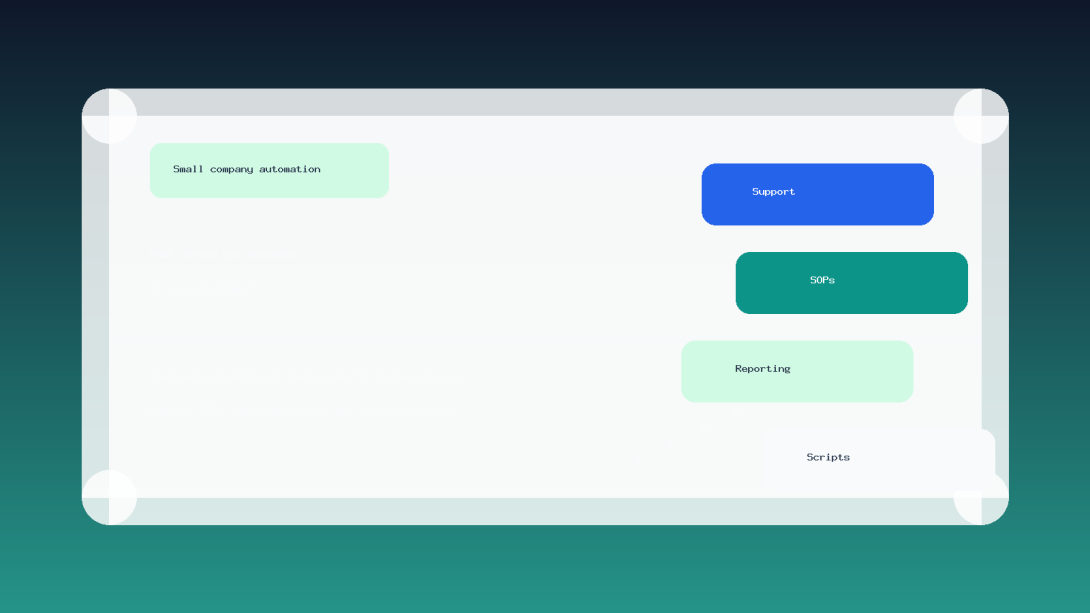
If you want to use Codex in a small company, do not start by trying to automate your hardest work. Start with the repeated work that already slows the team down every week.
That usually means support replies, meeting notes, SOPs, spreadsheet cleanup, recurring content tasks, and small scripts. These are the best first automations because they happen often, they are easy to review, and the time savings are obvious.
If your team is still deciding on the right account setup, read Why Codex Business Beats Plus for Small Teams first. Once that is clear, the next question is operational: what should you automate first?
Start with repeated work, not your core product logic
The first Codex workflows in a small company should be boring on purpose. You want tasks that are:
- done every week or every day
- easy for a human to review quickly
- annoying enough that people postpone them
- important enough that improving them changes team throughput
That is why the best starting point is usually operational work around the business, not the most complex part of the product itself.
1. Support replies and ticket summaries
Support is often the fastest win. Small companies answer similar questions again and again, but each reply gets rewritten from scratch.
Codex can help your team:
- turn a long customer thread into a short issue summary
- draft a clear reply based on your existing tone and policy
- group similar tickets into reusable response patterns
- prepare escalation notes for engineering or operations
This saves time without removing human judgment. The team still reviews the response, but the blank page is gone.
2. Notes, SOPs, and handoff documents
Most small companies run on undocumented decisions. A meeting happens, someone promises to document the process later, and later never comes.
Codex is useful here because it can turn rough notes into structured outputs:
- SOP drafts
- handoff checklists
- role-specific instructions
- postmortem summaries
- weekly operating notes
This is one of the highest-leverage automation categories because better documentation compounds. One useful SOP can save time for months.
3. Reporting, spreadsheet cleanup, and KPI commentary
Another strong early use case is recurring reporting. Small companies spend too much time cleaning exports, spotting changes manually, and writing the same summary every week.
Codex can help with:
- cleaning CSV exports
- standardizing column names and formats
- flagging obvious anomalies for review
- drafting KPI commentary from the numbers
- preparing a weekly update from multiple rough inputs
The output still needs validation, but even partial automation removes a lot of low-value handling work.
4. Content operations and FAQ production
Many small SaaS and service companies already know they should publish more content, improve landing pages, and keep help content current. The problem is not strategy. The problem is throughput.
Codex is a strong fit for first-draft content operations such as:
- blog outlines and article drafts
- landing page sections
- comparison-page structures
- FAQ question and answer drafts
- content refresh checklists from product changes
This works best when a human editor owns the final quality bar. The gain is not “publish without review.” The gain is “ship useful content consistently instead of rarely.”
5. Small scripts and glue tasks for internal operations
Codex is especially useful when the team has many tiny technical jobs that never make it into the sprint. These are tasks like renaming files, transforming exports, patching content, checking data consistency, or writing one-off integrations between tools.
For a small company, these scripts matter because they remove operational friction that nobody wants to do manually and nobody wants to prioritize formally.
This is often where technical teams feel the return first: not in a giant platform project, but in the steady removal of small recurring annoyances.
What not to automate first
Do not start with anything that is high-risk, hard to review, or tightly coupled to revenue-critical logic. Examples include pricing changes, payment handling, production database mutations, or fully autonomous customer communications.
Those areas may become good Codex workflows later, but they are poor starting points. Early wins should improve speed and consistency while keeping the review path simple.
A practical rollout for the first 30 days
- Pick three repeated tasks that already waste time every week.
- Assign one owner for each workflow.
- Define the input, expected output, and review step clearly.
- Track time saved or work shipped for two to four weeks.
- Keep the workflows that people actually reuse, then expand.
If you do this well, Codex stops being a novelty and becomes part of how the company operates.
Bottom line
The best first Codex automations for small companies are repeated, reviewable, and operationally useful.
Start with support, SOPs, reporting, content operations, and small internal scripts. These are the categories where a small team usually gets faster output, better consistency, and clearer return without taking unnecessary risk.
Answers